
Accessories to make love: what to chose and how to use them?
For those who are not lucky enough to be able to vary the pleasures in bed by making love elsewhere than in a bed, or outside… And for […]
 Download the app
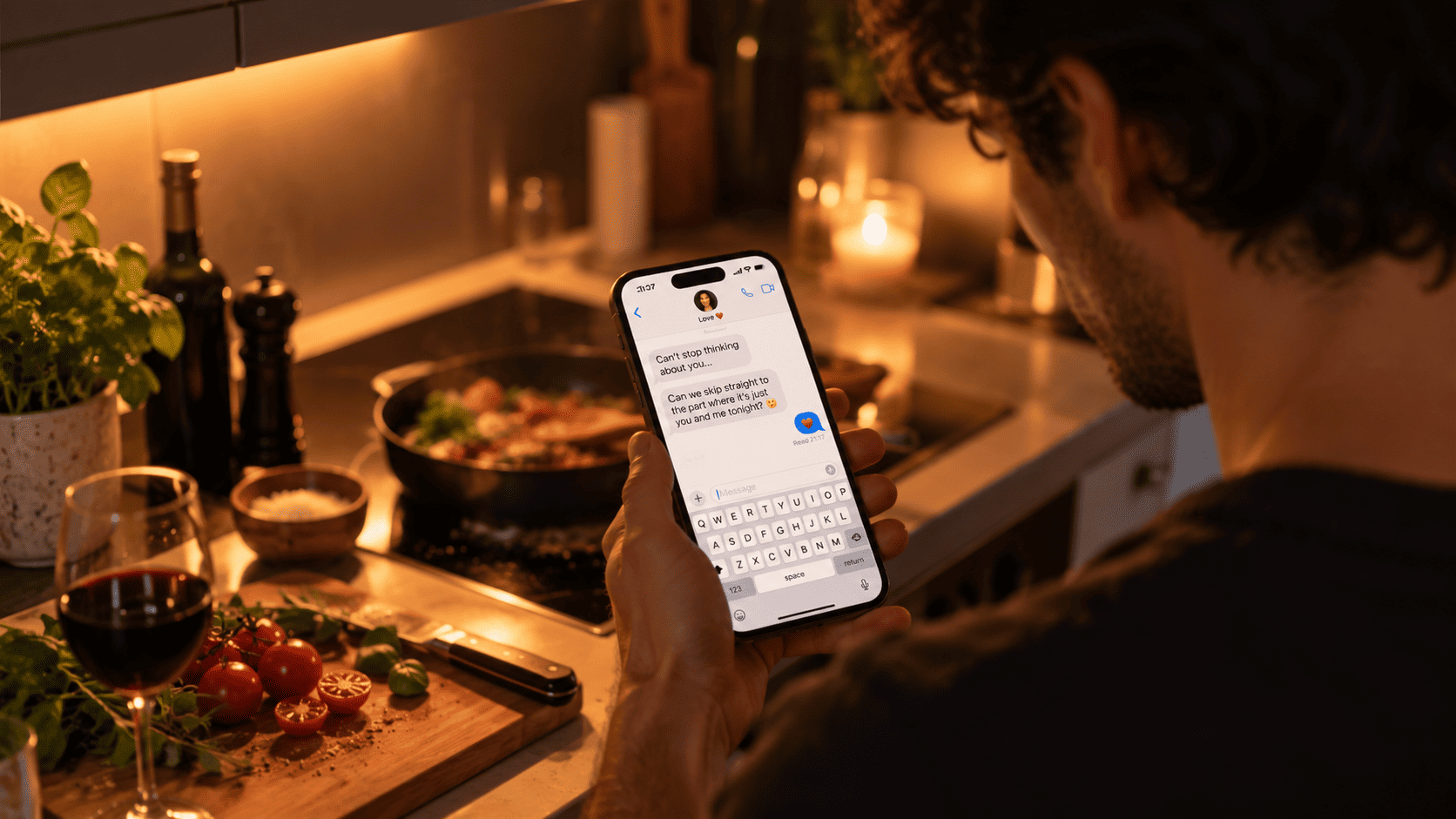
Sometimes the most exciting part of an intimate moment is everything that happens before it.
The message you weren’t expecting at 3 p.m. The look across the room that lasts slightly longer than usual. A kiss that ends just when you were getting into it. Knowing you have plans later that evening, and spending the next few hours wondering exactly what those plans might involve.
That’s the appeal of teasing. Instead of rushing straight toward the thing you both want, you give desire a little time and space to grow.
And you don’t need an elaborate seduction plan to make it work. Some of the most effective sexual teasing techniques are incredibly subtle. The idea isn’t to frustrate your partner indefinitely or play mind games. It’s simply to create anticipation together and enjoy the tension between not yet and maybe soon.
When you know exactly what is going to happen and exactly when it will happen, there isn’t much room for imagination. Teasing introduces a little uncertainty.
A suggestive message during the afternoon doesn’t tell your partner precisely what will happen that evening. It simply gives their mind somewhere interesting to wander. A lingering kiss before you leave for work can do something similar. The moment ends, but the thought of it can stay around for hours.
That mental space is a big part of anticipation. You’re not only enjoying what your partner is doing right now; you’re imagining what might happen next.
For some people, this kind of build-up is particularly important for desire. They may not spontaneously feel interested in sex in the middle of an ordinary day, but flirting, affection and the right context can gradually change the mood. If that sounds familiar, our article on different types of sexual desire explores why desire doesn’t always appear before intimacy begins.
Teasing works especially well when it doesn’t suddenly begin five minutes before sex.
Imagine you’re both going out that evening. In the morning, you tell your partner you have something in mind for later but refuse to explain. During the afternoon, you send a message that gives them one small clue. When you finally meet, you don’t immediately reveal the rest.
Nothing particularly dramatic has happened, but you’ve given the evening a story before it has even started.
You can do the same thing much more casually. Tell your partner they looked particularly good when they left that morning. Send them a song that reminds you of them. Mention a moment from the last time you were intimate that you keep thinking about. If you’re seeing each other later, simply saying “I’m looking forward to having you to myself tonight” can be enough.
The key is leaving something unfinished. A teasing message works because it opens a door without immediately showing everything behind it.
For couples who enjoy flirting through their phones, our sexting games for couples offer plenty of ways to turn that anticipation into a game, particularly when you’re spending the day, or much longer, apart.
Teasing often lives in the moments when something could continue, but doesn’t quite.
You lean in for a kiss, let it linger, then go back to whatever you were doing. You move closer to your partner on the sofa without immediately doing anything else. You whisper something suggestive while you’re getting ready to go out, knowing perfectly well that you both need to leave in five minutes.
These moments work because they interrupt the usual sequence.
In a long-term relationship, you often know your partner’s patterns incredibly well. You recognize the kiss that usually leads somewhere. You know what happens when they pull you closer in bed. That familiarity can be comforting, but occasionally changing the rhythm brings attention back to sensations that had become automatic.
So instead of always asking what you could add, experiment with delaying what normally happens next. Stay with a kiss for longer. Pause. Move away. Come back later.
Sometimes “not yet” creates more tension than immediately moving forward.
Teasing doesn’t have to look obviously sexual from the outside.
A hand resting briefly on your partner’s thigh under the table, fingers brushing their back as you walk past, a kiss on the neck while they’re cooking or standing slightly closer than necessary can all change the atmosphere without turning the moment into an immediate invitation for sex.
This works particularly well when your relationship already includes plenty of everyday affection. The difference between a familiar hug and a hug that lasts just a little too long can be surprisingly noticeable when you know each other well.
At the same time, affection shouldn’t become a code where every touch secretly means “I expect sex later.” Being able to kiss, cuddle and touch without an agenda is important too. Our article on being tactile and affectionate in a relationship looks more closely at maintaining that everyday physical connection.
The fun of teasing comes from both people recognizing the game. If your partner responds to that lingering touch by moving closer, you have your answer. If they don’t seem interested, let the moment remain exactly what it was: a little affection.
There’s a reason flirting scenes in movies can spend an unreasonable amount of time on two people simply looking at each other.
Eye contact leaves room for interpretation.
Try it when you’re somewhere you can’t immediately act on the attraction: across the table at dinner, while you’re out with friends or from opposite sides of the kitchen when other people are around. Hold your partner’s gaze for an extra second, smile, then return to the conversation.
You don’t need to make the expression exaggerated enough for everyone else in the room to understand what’s happening. In fact, the private nature of it is part of the appeal.
You both know what that look meant.
Nobody else needs to.
Mystery is useful. Complete confusion is less so.
Good teasing gives your partner enough to imagine without explaining exactly what comes next. You might tell them to keep Friday evening free but only reveal the restaurant later. Ask them to wear something you particularly like without telling them why. Send a message saying you thought about them in the shower this morning, then change the subject.
If you enjoy being more playful, turn it into a series of clues throughout the day. Each message can reveal a little more about what you have planned, or simply make your partner guess.
The point isn’t to create an elaborate scavenger hunt every time you want to flirt. It’s to resist the urge to explain everything immediately.
Anticipation needs a little empty space for imagination to fill.
Not everybody enjoys being teased in exactly the same way.
For one person, a suggestive message during the day is enough to completely change their mood. Someone else may respond much more strongly to physical closeness. Another person might love verbal flirting but find mysterious “wait and see” messages more stressful than exciting.
That’s why the best teasing isn’t a collection of universal tricks. It’s personal.
Pay attention to what makes your partner lean into the game. Do they flirt back when you send a suggestive message? Do they love being complimented? Does anticipation work better when they know roughly what to expect, or when there’s an element of surprise?
Our guide to erotic languages explores this idea more broadly. Different people can respond to anticipation, sensory experiences, energetic tension and other forms of intimacy in very different ways.
Knowing what works for your partner makes teasing feel less like performing a seduction technique and more like speaking a language the two of you have gradually developed together.
Teasing doesn’t have to stop once you’re finally alone.
If you tend to move through intimacy in a familiar sequence, deliberately slowing down can make familiar moments feel different. Spend longer kissing. Take your time getting closer. Let an embrace linger instead of immediately turning it into something else.
The idea is not to create frustration for the sake of it. It’s to notice the stages you normally rush through because you already know where they’re leading.
This can be particularly effective for couples who feel that intimacy has become a little predictable. Predictability doesn’t necessarily mean anything is wrong, it often just means you know each other very well. But occasionally changing the pace can make you pay attention again.
If you want to experiment with other ways of breaking familiar patterns, you’ll find more ideas in our guide to 20 tips and erotic games to spice up your sex life, where teasing and seduction are part of a wider approach to bringing novelty into a relationship.
One of the simplest forms of teasing is postponing something you both know you want.
Maybe you kiss before leaving for dinner and agree that’s as far as things are going for now. Maybe you spend an evening flirting while deliberately saving the rest for when you get home. If you’re apart for a few days, you can build a shared idea of what you’d like to do when you see each other again without planning every detail.
The waiting becomes part of the experience.
This can also help when everyday life makes spontaneous intimacy difficult. Work, children, travel, mismatched schedules and exhaustion don’t always leave room for desire to appear magically at the perfect moment. Creating anticipation allows intimacy to begin mentally before you actually have time to be together.
Of course, anticipating sex doesn’t create an obligation to have it later. You can spend all day flirting and still discover that one of you is exhausted by evening. Teasing works when it remains an invitation, not a contract.
Words can create anticipation without becoming explicit.
Instead of telling your partner everything you’re thinking, ask them something. “What do you think I’m planning for tonight?” “What would you want me to do if we had the whole evening to ourselves?” “What was the first thing you noticed about me today?”
Questions shift part of the fantasy to your partner. You’re no longer performing for them; you’re building the mood together.
They can also reveal things you didn’t know. Your partner’s answer may lead somewhere completely different from what you had in mind, and sometimes that is much more interesting.
If you like this kind of playful discovery, our 50 naughty questions for couples can give you plenty of conversation starters without requiring either of you to invent the perfect line on the spot.
There’s an important difference between building anticipation and deliberately making your partner prove how much they want you.
Healthy teasing is collaborative. Both people are enjoying the tension, and either person can change the pace or stop the game. It shouldn’t involve ignoring boundaries, repeatedly withholding affection to provoke a reaction or making someone anxious about whether you’re genuinely interested.
That distinction becomes especially important if one partner has a higher libido or experiences desire more spontaneously than the other. What feels like exciting tension to one person can feel like pressure to someone who isn’t currently in the same mood.
So notice the response. If your partner flirts back, moves closer or clearly enjoys the game, keep playing. If they seem distracted, uncomfortable or simply not interested that day, there’s nothing to “win” by continuing.
The best teasing leaves both people wanting to come back to the game.
Sometimes the hardest part of teasing is that you’re both very aware you’re trying to tease each other.
That’s where introducing a game can make things easier. Instead of having to manufacture the perfect seductive moment, you have something external creating uncertainty about what comes next.
With Couple Game, you can start with lighter questions and challenges and gradually move toward more intimate levels depending on the mood. The fact that neither of you knows exactly what the next prompt will be naturally creates some of the anticipation you’re looking for.
You don’t have to rush through the game either. Let a question start a conversation. Pause after a challenge. Make your partner wait before revealing your answer. If something sparks an idea, follow it rather than worrying about completing every round.
For more ways of introducing this kind of playful unpredictability, our collection of naughty games for two is another good place to explore.
Download Couple Game:
It’s easy to think of anticipation as simply the period you have to get through before the thing you actually want happens.
But when teasing works, the waiting is part of what you want.
The text message during the afternoon, the private look across a crowded room, the kiss that stops slightly too soon and the thought of what might happen later all become part of the intimate experience rather than just preparation for it.
You also don’t need to turn every date into an elaborate seduction game. Sometimes one message is enough. Sometimes it’s a touch as you walk past. Sometimes it’s telling your partner, with absolutely no additional explanation, “I have an idea for later.”
Then letting them wonder.
A little uncertainty, plenty of attention and enough time for imagination to do its thing can make something familiar feel surprisingly exciting again.
And sometimes the most effective thing you can do is simply not rush to the next part.


For those who are not lucky enough to be able to vary the pleasures in bed by making love elsewhere than in a bed, or outside… And for […]

Whether you have been in a relationship for a long time, or for a short time, it is often difficult to make your partner understand that you want […]

Waking up to a sweet message from the person you love can truly set the tone for the day. If you want to make your partner feel special […]
